What Makes Bars Part and Parcel of Urban Social Lives?
If you were to list the social facilities that are essential to sustainability in cities, would you think of bars? Most people would rank facilities such as cinemas, bowling centers, skating rinks, and more. But the truth is that bars play a very important role in shaping our neighborhoods, more so in the city where people tend to live separate lives. So, how do they achieve this?
Serving as the Third Place

The Third Place has its place rooted in sociology. But what is it? Well, this model proposes that human beings exist in different places that serve different roles in their lives. The first place is the home, which is where we get to relax and cater to our familial responsibilities. The second place is the workplace, which comes with the ups and downs of eking a living. And the third place ties to the community, where we get to be around other people in informal settings. The bar falls smack into the third place and thus offers the following perks:
- Neutrality. In first and second places, we are called to perform. For example, at the workplace, employees must do what their employers require. Unfortunately, this need for performance carries a weight that can result in unrelenting pressure on people. But with bars, there are no such expectations. Everyone has the right to be there, and it is not on you to host other people, give or receive instructions, or go out of your way to meet a certain expectation. You can just be, just like all the other people around you, and that creates a sense of calm and belonging.
- Levelling. In most bars, people do not care about status. So, regardless of one’s socioeconomic status, everyone belongs. What’s more, statuses take a backseat as people connect based on shared interests, be they sports games or humor. That means that the company director can sit next to an unemployed person, and they can both share a drink as they talk about the game last night. People no longer feel the need to measure up to others, as that does not matter.
So, what do these third places look like? We have dive bars, which are often the easiest to access and seem to almost never change, even with the turn of the decades. Next, we have hotel bars where locals and foreigners meet in an environment that is reminiscent of a boardroom, but with much less rigidity. From here, we have cocktail bars, which, just as the name suggests, are more about the experience and often feature a bartender who knows how to put on a good show. And finally, we have gastropubs, which center on providing food and comfort alongside the drinks. Regardless of the bar setup, conversations are the order of the day, and people get to know each other beyond titles, creating a high level of trust and friendliness that helps people embrace their city and its residents even more.
Being the Transition Space
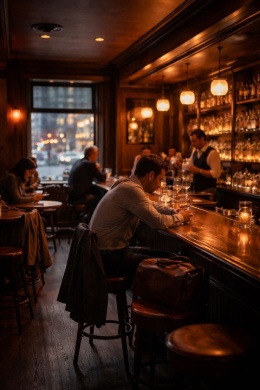
Most people lead predictable lives where they are either at home with their families or at work chasing their career goals. But the transition from work to home is not always easy. For some people, the thought of leaving the office for a solitary evening at home can feel overwhelming, while for others, heading straight home to a full house of responsibilities can feel quite stressful. Bars serve as necessary transitions in these and other cases in the following ways:
- Decompression. As stated under the Third Place, people embrace different personas in every place. At home, they step into the role they have assumed in the family and at work, they are a good employee, tough boss, or any other character they play. It takes time to shed one persona in place of the other. So, for many people, a stop at the bar provides enough time to gain some introspection about their day before heading home.
- Destressing. Many people have so many responsibilities at work and at home that they barely ever have time to themselves. As such, they often find that the stress from one aspect of their lives spills over into the other aspects. That’s why many people choose to stop by a bar and just relax. Here, they know they do not need to perform and can just take some time for themselves, where they can just sit in silence, play games, or even talk to others. It’s the one time during their day when they get to do what they want to do, and this helps them pour into their cups.
This transition is especially helpful for people who live alone in cities. It is a well-known fact that loneliness is a growing problem in urban areas, and this has been proven to have negative effects on people’s well-being. Bars provide these individuals with neutral spaces where they can be in the presence of other people. Even if they may not engage in deep conversations with these other people, they get to be part of a community, and this helps them feel less alone and makes their transitions from work to home much easier.
Overlapping Social Worlds
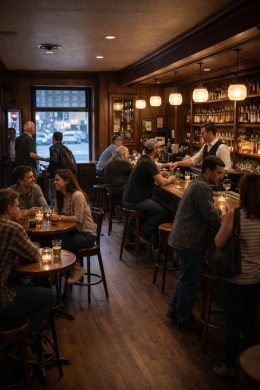
Cities are home to people from all walks of life who differ not just in their social statuses but also in their experiences in life. As a result, people from different social worlds rarely get to meet or even interact with each other despite being in the same city. But bars play a big role in helping these people meet in the following ways:
- Serving a mix of crowds. In bars, you will find people from different social groups. Take a given bar night as an example. Here, you can come across college students, local workers, tourists, and people who are in the city for a conference. While these people may not share backgrounds, they are likely to interact based on their shared interests, which can be as simple as loving the same artists. Thanks to these interactions, people are able to step back from their biases and learn more about other people’s lives, which helps blur the divide that exists between these social groups.
- Providing weak ties. People are often quite open to new interactions when in bars. After all, the energy feels good, and the conversations just flow. Therefore, it is not uncommon for people to strike up conversations that are so engaging that they lead to contact exchanges with the hope of building relationships. From these ties, people get access to new information which can relate to anything from jobs to courses to upcoming events. And sometimes, these become lasting friendships or romantic relationships that once again marry different social worlds.
And, of course, even without engaging with each other, people in different social groups benefit a lot from being around each other. Bars create environments where people get to share the same energy while also interacting with each other through micro moments such as giving each other way. Even with these small interactions, people get to learn a lot about each other and the people who live in the city, which broadens their perspectives about each other for good.
Cohesion versus Tension: The Complexity of Bars
While it is true that bars are essential in unifying city residents, it is important to note that these spaces can also result in tension. Here are ways in which this can occur:
- Exclusivity. As stated earlier, most bars are neutral spaces where socio-economic statuses do not matter, and people instead connect based on shared interests. However, this is not always the case. There are some bars which come up with criteria that are meant to lock other people out. For example, some bars may use very high prices to ensure that they only cater to people who can afford those prices, while others may use strict dress codes as a way to keep some people out. Where such criteria are in place with the aim of only allowing in people who meet a specific social class, the bars contribute to segregation. As such, these kinds of bars can result in tension as some people may feel hurt by the segregation.
- Gentrification. Bars are often representative of their neighborhoods. For example, in the older parts of the city, you come across bars that have been operating for decades and thus have a history that ties to that part of the city. And in the newer places, you find bars that represent the changing times. So, what happens when a bar does not quite fit into the picture? Studies have shown that when newer and pricier bars set up shop in older neighborhoods, they often result in a change in the neighborhood dynamics, which can push rents and other prices up. In such cases, not only does the bar not fit in, but it also negatively affects the lives of the people in that part of the city, which can cause tension.
So, as much as bars can contribute to deeper and more meaningful connections among residents in cities, it’s important to take note of these instances where these same spaces can be a source of distress to people.
The Future of Bars
Gentrification and exclusivity aside, most bars are holding on to the same traditions that we have had over the years, a core part of Bar Culture. They continue to serve as neutral places where people can let go and just be. However, there has been a shift in rituals with the younger generations. In the past, most people who frequented bars would go there to have a drink and chat with other guests. But with these younger generations, more people are seeking sober bars where they can either enjoy mocktails or caffeinated drinks in place of alcohol. They still want the social aspects that are characteristic of the typical bar, but are leaning more towards non-alcoholic drinks. Therefore, many bars have now embraced the creation of spaces that serve these changing needs, which has been a welcome change as it has now opened up these spaces to an even bigger audience of people seeking a third place.
Quick Links
Gentlemen's club [M]
— 🅾️yd 🅱️awgentte (@lloyd_agt) March 3, 2025
Elemental | Tonberry | Mist W5 P44
I always wanted to create a luxurious bar with billiards inside. Pretty happy with the result! ✨️#ff14housing #hgxiv pic.twitter.com/8rVLjjjfci
With the kind support: