The Making of a Community
Whether you are heading to your local bar or hanging out at a hotel bar, you are sure to take note of the invisible systems that go a long way in making these spaces anchors to the community. So, which are these systems? On one hand, you have the scents, sounds, and lights which have been carefully curated to immerse people into the relaxed atmosphere of the bar. And on the other hand, you have the social dynamics that make or break the bar. Let’s focus on the latter.
The Bar’s Unique Circadian Rhythm
As humans, we run on circadian rhythms that have us awake in the early morning hours and sleepy as the night drags on. Save for people working night shifts, most of us settle into these rhythms as they align with our family and work responsibilities. Bars have similar rhythms, but they work quite differently from ours, such that most of the action takes place in the evening and at night. Here is how this works:
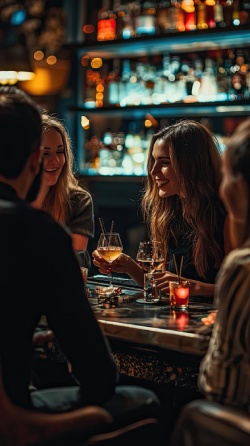
- From 4 pm. Most people leave their work at around 4. But given the differences between their work and home spaces, they need a middle point where they can decompress before moving on to the next part of their day. And the bar serves as the ideal space. After all, here, people do not need to fit into any given role and can simply take a seat, grab a drink, and get lost in their thoughts. They have nobody to answer to, and should the mood strike, they can share their thoughts and feelings with the people around them. To help people decompress, bars often play soft music at this time and use warmer to neutral lighting, which encourages people to just sit and be. You will also notice that the bartender tends to give guests space at this time as they reset.
- From 7 pm. By this time, most people have decompressed. Those eager to head home have cleared their bills, while those who are ready to hit the dance floor or engage in conversations have stuck around. Friends groups, dates, and other people start arriving at this time, and you can tell that the social energy is catching on. The volume of the music increases, the beats feel more upbeat, and you can see people leaning in closer to hear each other. Even the bartender starts interacting more with guests, and you can tell that the energy has shifted as the night settles in.
- By 11 pm. At this point, most of the guests have had several drinks, and they no longer feel the need to perform. They are singing along to the music, making friends, playing games, etc. Their job titles and social statuses have now taken a complete backseat, and people cannot help but connect based on shared passions and interests.
Watching the energy and social dynamics change in bars is quite fascinating. You get to watch as people transform from their guarded post-work personas to being free and accepting of themselves and the people around them. It’s no wonder that people keep going back to bars, as they feel that they can just be themselves without the fear of being judged.
The Social Hierarchy in Bars
Outside the bar, people exist in a world where socio-economic dynamics hold a lot of power. But inside the bar, the rules are very simple. Everyone starts off on equal footing, and the easiest way to keep it that way is to respect other people, contribute positively to the energy in the room, and pay your tab. It really is that simple because beyond that, people do not really care what you do for a living, where you live, your marital status, or any of the other things that society uses to categorize individuals. That is why many people love bars. It’s not because of the drinks. It’s because it’s the one place in their lives where they can be anonymous and be seen as equals.
Even so, bars do have specific archetypes that play a role in the social dynamics. Here are the characters you come across in these spaces and why their presence matters:
The anchor. Every bar has a patron who has been coming in for drinks and sitting in the same place for years on end. Some of these regulars have been coming for decades and are so ingrained with the bar that they pretty much make up its structure. These anchors know almost everything about the bar and can even remember which stool has a loose leg and the one time the boss had a bad fall. Anchors are not just important to other guests for familiarity and history, but also to the staff who see them as a sign of stability.
The mayor. Anchors tend to be silent, and you may not even notice them the first time you walk into a bar. But you will definitely notice the mayor, as these patrons tend to be loud and performative. Not only do they tell stories, but they are also very charismatic and open, so much so that you can mistake them for the bar owners. But while they provide warmth and energy, they provide additional work to bartenders who have to make sure that these mayors are not dampening other people’s experiences with their performances.
The room reader. While anchors are often social, room readers tend to be neutral and easily move between groups. Just like the anchors, they know a lot about the bar and its people and are essential in helping people connect, as they know who does what and where. Since they are open to interacting with different people, they help new guests feel welcome as they can share the ins and outs of the bar and its people. Interestingly, though, some room readers are loners and will keep to themselves. But they are always willing to help others out.
The silent observer. Have you ever come across those guests who enter the bar, have a drink while watching TV or reading a book, and then leave without ever talking to others? These people are known as ghosts, and they enjoy being alone around other people. In fact, some will go as far as having a whole table to themselves or guarding an empty stool beside them to avoid company. They often do not mean any harm and simply enjoy having their own space.
The confidant. Then you have the patron who only seems to talk to the staff and is almost always at the counter talking to the bartender. Usually, they are older adults who have been frequenting the bar for a long time. They are essential to the bar as they provide the staff with emotional support. Take the example of times when the bar is busy. Confidants have no trouble biding their time as others get served first. They also know the staff personally and often get involved in their work and personal lives.
You may be wondering whether being in any of these categories comes with perks. Well, yes. Anchors are often served first, and usually, they do not even need to ask for the drink as the staff knows their usual. Confidants are often acknowledged when they walk in, but might not always get served as soon as they sit, as the staff expects them to be more patient than other guests. Mayors and room readers also get priority service as they are regulars. Then, we have the newcomers who come in and follow the social norms. They tend to get priority, too. At the very bottom of the queue, there are the entitled outsiders who come in, snapping at bartenders or waving cash at them. Bartenders tend to penalize such people by serving them last, which serves as a lesson to other guests to maintain the social contract, which revolves around being respectful of everyone.
The Everyday Rituals in Bars
Even when someone does not fall into the archetypes described above, bars provide everyone with a sense of belonging through rituals. Here are some examples:
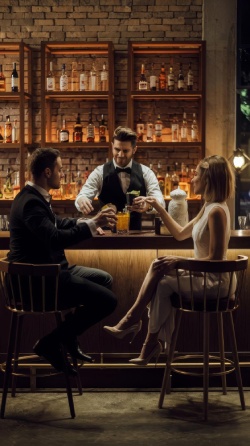
- Settling in. Many people feel so comfortable in bars that they subconsciously mark their territory by placing personal items on the bar. These can be wallets, keys, phones, etc. No matter the items, this act of placing these items out in the open signifies that they feel right at home. You see this habit more so with the regulars who have come to see the bar as a home away from home.
- Buying back. Regulars such as anchors and room readers often get free drinks from the bartenders. On the surface, it may look like this is transactional and a way to encourage the regulars to keep spending money in the bar. But it is not. Instead, it is the bartender’s way of showing these regulars that they recognize their loyalty and have a deep respect for them.
- Sharing. Bars often have these long-standing traditions where guests share things with each other. It can be as simple as inviting a guest to a game of darts or sharing a newspaper crossword with them. These somewhat simple acts are ways to engage with other guests without going through the formal channels. And they work because the people being invited or engaged do not feel pressured to introduce themselves as they would in other settings.
- The round. Mayors love telling stories. But even more than that, they love having an audience for their stories as they enjoy seeing people’s reactions to their tales. It’s not uncommon for them to buy a round for a group of strangers. In doing so, they secure an audience to which they can share more of their memories. But it’s not just mayors who buy these rounds. Often, people celebrating key milestones in their lives will offer to buy others a round of drinks so that they can share their joy, and people happily embrace these gestures.
The longer that you frequent a bar, the more you clock these rituals and the more you get to cement your place in the bar. But as we said, everyone belongs as long as they are respectful.
The Bartender as the Social Governor
You may notice that this guide positions the bartender at the heart of the social dynamics in bars, and that’s because they are. Bartenders know how to read the room and act in ways that maintain the peace and energy. How?
- Constant monitoring. Bartenders scan the room without staring at the guests, which they do from the corner of their eye or through the mirrors, where available. This way, they can tell quite a lot, such as when a customer needs another drink or when someone is feeling uncomfortable, all without fixating on the person. It allows them to make timely decisions, such as refills or interrupting conversations without being obvious that they were paying attention to the person.
- Conducting conversations. Since bartenders are well attuned with how people are behaving, they know how to steer conversations to maintain the vibe in the space. For instance, if a group of people has had one too many drinks and has started becoming rowdy, the bartender may slow down service to their section so that they can cool off. In the same way, a bartender may notice that a newcomer is having trouble joining conversations and may introduce them to a regular.
Since bartenders work quietly in the background and make a point of not getting in the way, people barely notice these interjections and redirections, yet they go a long way in determining how people engage with each other.
Quick Links
Gentlemen's club [M]
— 🅾️yd 🅱️awgentte (@lloyd_agt) March 3, 2025
Elemental | Tonberry | Mist W5 P44
I always wanted to create a luxurious bar with billiards inside. Pretty happy with the result! ✨️#ff14housing #hgxiv pic.twitter.com/8rVLjjjfci
With the kind support: